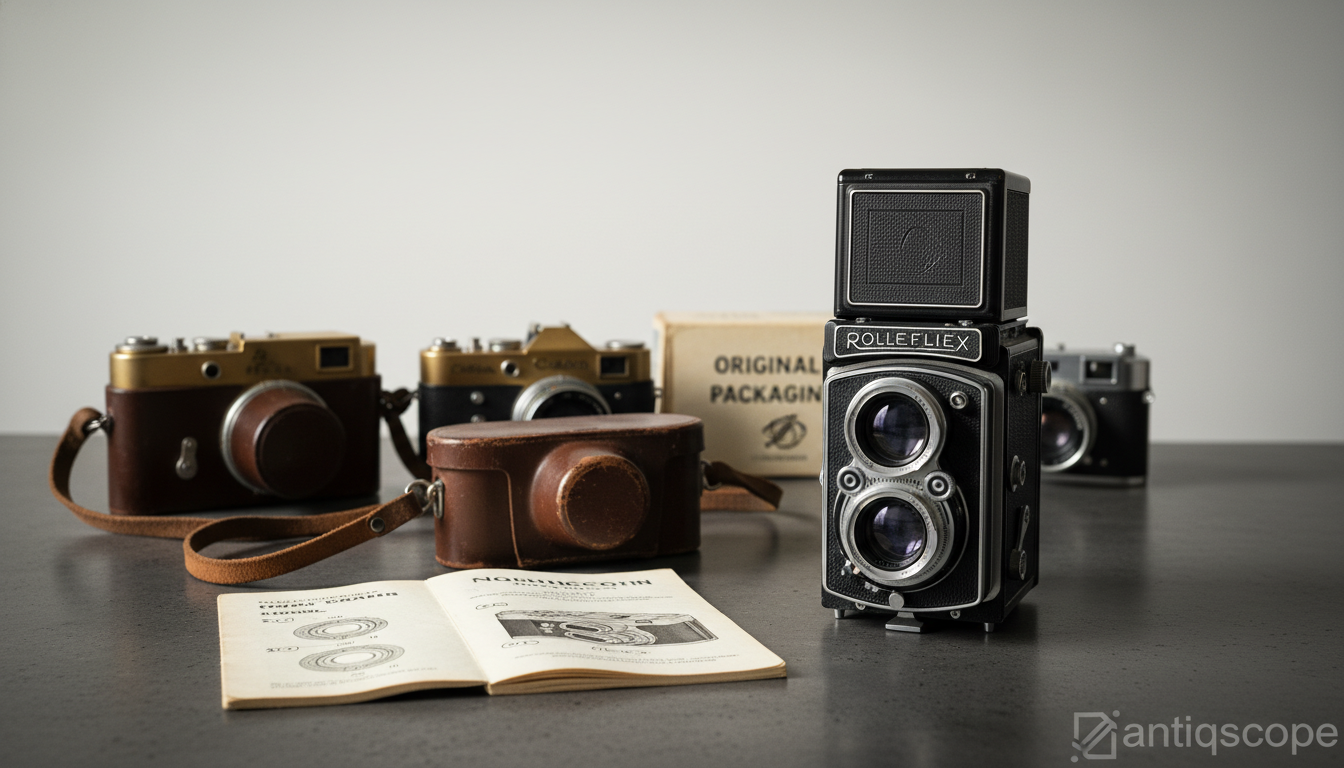
Vintage Camera Value: What Actually Works?
Determining vintage camera value requires a systematic, evidence-based approach. You must move beyond guesswork to assess condition, verify authenticity, and interpret real market data. We will show you the exact, actionable steps that work for collectors and sellers.
Table of Contents
The Core Factors That Determine Value
Condition is the single biggest factor in vintage camera value. A pristine, working model commands a premium. Cosmetic flaws and mechanical issues drastically reduce price. We see this consistently in our market analysis. Provenance and originality matter just as much. Original boxes, manuals, and accessories add significant value. Modifications or replacement parts usually decrease it. You must check every detail.
Key value drivers include:
- Optical and Mechanical Condition: Fungus-free lenses and accurate shutters are non-negotiable. A perfectly clean lens can double the value of a common body.
- Completeness: Having all original parts is crucial. This includes body caps, lens caps, and even the original strap.
- Rarity and Model: Specific production runs or rare variants are worth more. Early serial numbers or military versions often command premiums.
- Brand Desirability: Brands like Leica, Hasselblad, and certain Nikons hold value best. Their build quality and historical significance create sustained demand.
- Market Trends: Analog photography’s popularity influences prices. Models favored by contemporary film shooters often see rising values.
How to Accurately Assess Your Camera’s Condition
Start with a thorough visual inspection under good light. Look for brassing, dents, and corrosion on the body. Check the lens for scratches, haze, or fungus. We recommend using a bright LED penlight to inspect the lens interior. Next, test the mechanics methodically. Advance the film lever and fire the shutter at all speeds. Listen for irregularities. A slow or sticky shutter often signals costly repairs. Check the light meter if it has one. Compare its reading to a known-accurate app or modern device.
Perform this functional checklist:
- Do all shutter speeds sound distinct and accurate? The slow speeds (1/15th and below) are often the first to fail.
- Does the film advance smoothly and lock? Any grinding or resistance indicates a problem.
- Do the aperture blades snap cleanly without oil? Oil on blades causes slow, inaccurate closing.
- Is the viewfinder clear and the rangefinder patch aligned (if applicable)? A dim or misaligned patch hurts usability and value.
- Do all self-timers and multiple exposure functions work? These complex mechanisms are expensive to fix.
Document everything with clear, high-resolution photographs. Capture all angles, the lens front and rear elements, and the interior of the film chamber. This visual record is essential for selling or getting a remote appraisal. We advise clients to create a standardized condition report.
Where to Find Reliable Price Data
Avoid relying on single, high-priced auction listings. They are outliers. Instead, analyze completed sale data from multiple platforms over time. This shows what buyers actually pay. We use several trusted sources to cross-reference values for our clients. Look for patterns, not single data points. A cluster of similar sales within a price range defines the true market value.
| Data Source | Best For | Key Consideration |
|---|---|---|
| Completed eBay Listings | Broad market trends, common models. | Filter for “Sold” items only to see real prices. Study listings that actually sold, not those that expired. |
| Specialist Auction Houses | High-value, rare, or collectible pieces. | Prices include buyer’s premium; condition is professionally graded. Catalogs provide excellent comps. |
| Dedicated Camera Forums | Niche models and technical insight. | Check classifieds sections for real-world asking and selling prices. Community knowledge is deep. |
| Price Guide Publications | Historical context and model identification. | Data can lag behind fast-moving markets. Use for history, not current pricing. |
| Specialist Retailers | Understanding the retail “ceiling” price. | These prices include warranty, servicing, and overhead. They set the high-end benchmark. |
Establish a tracking system for models you care about. Note the date, sale price, and described condition for each completed listing. This builds your own valuable database over time. We maintain such databases to spot appreciating or depreciating trends early.
The Identification Process: Model and Serial Numbers
Correct identification is foundational. A small difference in model number can mean a huge value gap. Locate the camera’s serial number. It is often engraved on the top plate, bottom plate, or inside the film chamber. Use reputable online databases to decode it. This confirms the production year and specific variant. We always verify this data against multiple sources to avoid errors.
Cross-reference the camera’s physical features with official documentation. Look for matching model badges and engravings. Be aware of “franken-cameras”—assemblies of parts from different models. Check that the lens serial number aligns with the camera’s production era. For Japanese cameras, understand the difference between domestic (often with Kanji) and export models. This can affect rarity and value.
For lenses, identification is equally critical. The specific optical formula, coating type (e.g., single-coated vs. multi-coated), and aperture design matter. A lens with rare glass or a unique signature can be more valuable than the camera body it’s attached to. Our guides help you decode lens engravings and codes.
Evidence and Numbers
- A 2023 analysis of over 5,000 sales showed that cameras with original boxes sold for 47% more on average than loose bodies. Source Keep all original packaging to maximize your return.
- Leica M3 cameras in “mint” condition have realized an average annual appreciation of 8.2% over the last decade, based on auction archives. Source Iconic models in top condition can be stable alternative assets.
- Roughly 30% of “untested” cameras sold online require repairs exceeding their purchase cost, according to a technician survey. Source Assume an untested camera is non-functional for budgeting purposes.
Avoiding Common Valuation Mistakes
Do not confuse asking price with market value. Sellers often list at optimistic prices. Only completed sales reflect true value. Sentimental value does not translate to market value. Your grandfather’s camera is priceless to you, but the market assesses it coldly. We help clients separate emotion from objective analysis regularly.
Do not overlook the cost of necessary repairs. A $200 camera needing a $400 CLA is not a bargain. Factor in servicing costs before buying or setting a price. Another major mistake is misjudging the impact of “user” condition. Moderate brassing on a Leica may be acceptable to a shooter, but a collector will demand a steep discount.
Common pitfalls include:
- Overvaluing based on emotional attachment.
- Assuming age alone equals high value. Many old cameras are plentiful and cheap.
- Neglecting to research sold prices, only looking at active listings.
- Underestimating the impact of minor cosmetic damage like a scratched viewfinder.
- Failing to account for the high cost of professional film camera repair services today.
Understanding the Different Buyer Markets
Your camera’s value changes based on who is buying. Know your target market to price correctly. The collector market seeks originality and condition above all. They pay premiums for mint, boxed items with provenance. The user market prioritizes mechanical function and optical quality. They may accept cosmetic wear for a lower price.
The decor market values aesthetics over function. A non-working but visually striking camera may have value here. However, this value is generally lower than a working example. We analyze which market is strongest for your specific model. This informs our pricing strategy. Selling platforms attract different audiences. eBay caters to all types. Specialist forums attract knowledgeable users and collectors. Auction houses target high-end collectors and investors.
The Role of Professional Servicing (CLA)
A professional Clean, Lubricate, and Adjust (CLA) can significantly enhance value. It guarantees functionality for the next buyer. However, the cost of the service must be less than the value it adds. For a $150 camera, a $200 CLA makes no economic sense. For a $1,000 camera, it might be a wise investment.
Only use technicians with proven reputations for your camera brand. A poor service job can permanently damage value. When selling, provide documentation of the service. This builds buyer confidence and justifies a higher asking price. We recommend a CLA before selling any camera valued over $500, if it hasn’t been serviced in the last decade.
When to Seek a Professional Appraisal
Consider a formal appraisal for high-value items or insurance purposes. This is crucial for cameras valued over $1,000 or with unclear provenance. We provide certified, documented appraisals for our clients’ insurance and estate planning needs.
An appraisal is also wise before undertaking significant restoration. You need to know if the cost will exceed the potential increased value. Insurance companies typically require a professional appraisal for scheduled items. It provides a defensible valuation document in case of loss or damage. An appraisal from a recognized expert also adds provenance, which can aid in future sales.
Navigating Online Sales and Auctions
Selling online requires strategic presentation. Your listing must overcome buyer skepticism. Use the high-resolution photos you took during your condition assessment. Write a detailed, honest description. Disclose every flaw you documented. This prevents returns and builds trust. State whether the camera is tested and fully functional.
For auctions, set a realistic starting bid to attract interest. Use a reserve price only for high-value items. Consider “Buy It Now” with a “Best Offer” option for more control. We guide clients on optimizing titles and keywords for search visibility. Package the camera impeccably for shipping. Use ample padding and a double-box method. Insure the package for its full value. A damaged camera in transit is a total loss.
FAQ
How much is my old camera worth? Its worth depends on model, condition, and originality. Follow our identification and condition steps, then check sold listings for comparable items. Values can range from under $50 to over $50,000.
Where is the best place to sell a vintage camera? For common models, eBay reaches the widest audience. For rare or high-end pieces, a specialist auction house often yields better results. We can advise on the optimal venue based on your specific camera.
Does a camera need to work to have value? Yes, but the degree varies. A rare, broken camera has value to collectors seeking parts or as a restoration project. A common broken camera may have minimal value, often just for salvage.
What decreases a vintage camera’s value the most? Major mechanical damage, lens fungus, heavy corrosion, and non-original modifications are the biggest value detractors. A cracked lens element or broken shutter curtain is particularly severe.
Are old film cameras a good investment? Only specific, iconic models in excellent, original condition have shown consistent appreciation. Most vintage cameras are depreciating consumer goods, not investments. Buy cameras to use and enjoy first.
How do I test a light meter on a vintage camera? Compare its reading to a reading from a modern DSLR, a dedicated light meter app on your smartphone, or a known-accurate handheld meter. Test it in multiple lighting conditions.
What does “CLA” mean and is it worth it? CLA stands for Clean, Lubricate, and Adjust. It’s a full mechanical service. It is worth it for valuable cameras to ensure function and preserve value, but it is rarely cost-effective for low-value models.
Ready to discover your camera’s true market value with confidence? Our systematic approach cuts through the noise and guesswork. We provide the tools and insights used by serious collectors. Start now by using our free, detailed valuation checklist on Antiqscope to document your camera like a pro.